

NATO Centres of Excellence (COEs)
A NATO-accredited Centre of Excellence (COE) is a multi-nationally or nationally established and sponsored entity, which offers recognised expertise and experience within a defined subject matter area to the benefit of the Alliance within the four pillars of NATO's COE programme.
COEs train and educate leaders and specialists from NATO member and partner countries, assist in doctrine development, identify lessons learned, improve interoperability and capabilities, and test and validate concepts through experimentation. They support the transformation of NATO while avoiding the duplication of assets, resources and capabilities already present within the Alliance.
COEs cover a wide variety of areas such as civil-military cooperation, cyber defence, military medicine, energy security, naval mine warfare, defence against terrorism, cold weather operations, counter-IED, climate change and security, and space.
Although not part of the NATO Command Structure or of other NATO entities, COEs form part of the wider framework that contributes to the functioning of the Alliance. Allied Command Transformation (ACT) has overall responsibility for COE coordination, including establishment, accreditation and periodic assessments.
Learn more about NATO COEs on the ACT website →
The Four Pillars
Each Centre of Excellence delivers its expertise through at least three of the four pillars:
- Education, Training, Exercise, and Evaluation (ETEE);
- Analysis and Lessons Learned (A&LL);
- Doctrine Development and Standardisation (DDS);
- Concept Development and Experimentation (CD&E).
Education, Training, Exercise, and Evaluation (ETEE)
Delivering courses, seminars and training activities to enhance expertise across NATO and partner nations. Supporting NATO exercises with subject matter experts, observers, trainers and evaluators. Developing curricula and e-learning tools.
Analysis and Lessons Learned (A&LL)
Collecting, analysing and sharing lessons learned, best practices and operational insights from operations, exercises and experimentation. Maintaining a repository of knowledge in cooperation with the Joint Analysis and Lessons Learned Centre (JALLC).
Doctrine Development and Standardisation (DDS)
Contributing to NATO doctrine development and standardisation processes. Ensuring interoperability across the Alliance through harmonised procedures, standards and publications.
Concept Development and Experimentation (CD&E)
Developing and testing new concepts to address emerging challenges. Conducting experimentation activities and supporting innovation initiatives. Validating concepts through wargaming, exercises and technology integration.
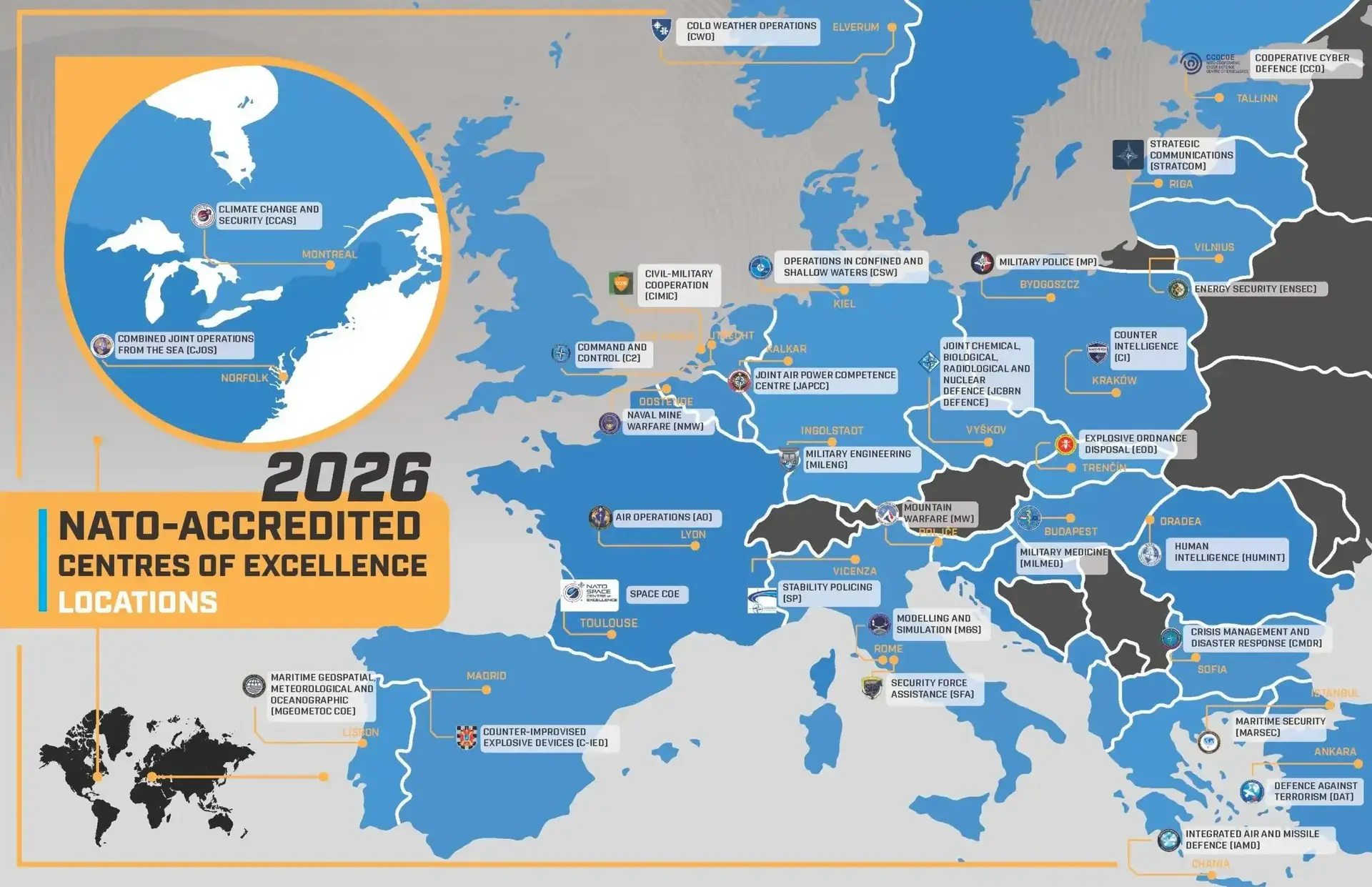
Map of COEs locations
Currently, there are 30 NATO-accredited Centres of Excellence, each specialising in a specific field, from cyber defence to maritime security, from military medicine to climate change and security.